The International Center of Photography (ICP) presents its exhibitions for Fall 2026.
I'm So Happy You Are Here: Japanese Women Photographers from the 1950s to Now.
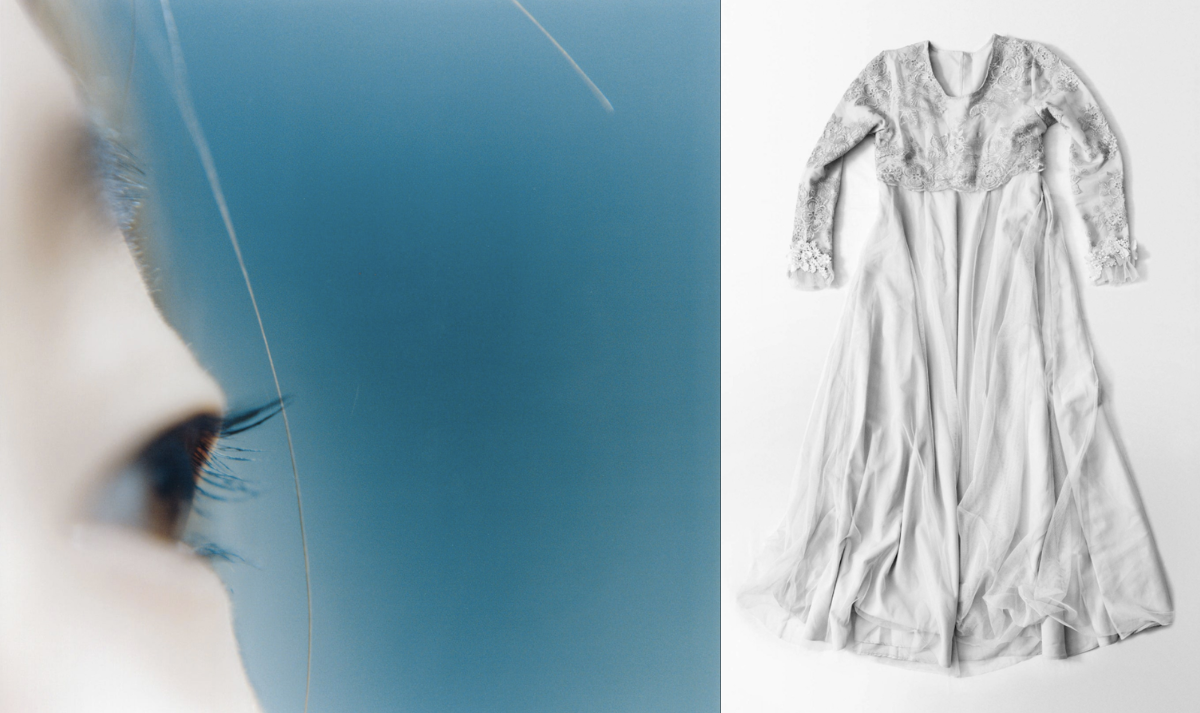
ICP is excited to present I'm So Happy You Are Here: Japanese Women Photographers from the 1950s to Now, (pictured an exhibition organized by Aperture that highlights the extraordinary and varied work produced by twenty-eight intergenerational artists spanning post-war Japan up to the present day. This collection of historical and contemporary works by Japanese women photographers-many of whom have been recognized for their contributions while others have gone without substantial public recognition -weaves together three major motifs: observations of everyday life that are both delicate and blunt; critical perspectives on the social roles inhabited and often reinterpreted by Japanese women; and experiments with and extensions of the photographic form. Together, these works provide a foundation for the continued study, exhibition, and celebration of the contributions of Japanese women to the history of photography.
Curated by Lesley A. Martin, Executive Director of Printed Matter, Takeuchi Mariko, photography critic, curator and professor at Kyoto University of the Arts and Pauline Vermare Phillip and Edith Leonian Curator, Photography, Brooklyn Museum, I'm So Happy You Are Here: Japanese Women Photographers from the 1950s to Now marks the first US presentation of a landmark exhibition that originated with the 2024 Aperture publication and accompanying exhibition at the Rencontres d'Arles of the same name. Since then, the exhibition has traveled to Fotomuseum Den Haag, The Hague, Netherlands; Fotografie Forum Frankfurt, Germany; The Photographers' Gallery, London, United Kingdom; and most recently Hikarie Hall, Tokyo, Japan (Organized by Bunkamura). After its run at ICP, the exhibition will continue on to additional venues internationally.
I'm So Happy You Are Here: Japanese Women Photographers from the 1950s to Now features work by Fujioka Aya, Hara Mikiko, Hiromix, Ishikawa Mao, Ishiuchi Miyako, Katayama Mari, Kawauchi Rinko, Komatsu Hiroko, Kon Michiko, Nagashima Yurie, Narahashi Asako, Ninagawa Mika, Nishimura Tamiko, Noguchi Rika, Nomura Sakiko, Okabe Momo, Okanoue Toshiko, Onodera Yuki, Sawada Tomoko, Shiga Lieko, Sugiura Kunié, Suzuki Nozomi, Tawada Yuki, Tokiwa Toyoko, Ushioda Tokuko, Watanabe Hitomi, Yamazawa Eiko and Yanagi Miwa.
"ICP is excited to celebrate the extraordinary contributions to the field of photography made by these twenty-eight artists," said Bob Jeffery, Chief Executive Officer of ICP. "With ICP and Aperture's combined resources, this partnership allows us to exhibit a boundary-pushing collection of work in New York, presented in the U.S. for the first time."
Since the 1970s, Japanese photography has become the subject of numerous publications and international exhibitions. While recognition has primarily centered on male photographers, innumerable women have played a key part in the medium's development, though their practices have remained largely underrepresented and underappreciated both within Japan and abroad. This restorative survey presents a wide range of styles and formal approaches used by photographers to respond to the experiences and perspectives of women in Japanese society more broadly, while showcasing their creativity through key images, photobooks and magazines, along with examples of installation, sculpture and video as well. By providing a necessary and critical counterpoint to our understanding of Japanese photographic history, I'm So Happy You Are Here: Japanese Women Photographers from the 1950s to Now also provides an electrifying expansion of photographic history writ large.
The sweeping historical scope of the exhibition shows how photography in Japan was used to both process and consider the rapidly changing nature of life throughout the country. Whether due to the post-World War II reconstruction and occupation by the United States' military, the mainstreaming of political issues such as the women's liberation movement, which advanced a radical restructuring of Japan's patriarchal society, or the rise of the pop culture industry, photographers were developing new thematics and formal strategies to confront the shifting ground beneath their feet. More than simply being part of the growing industry and culture around the medium, women photographers were crucial to the development and popularity of photography in Japan during this period, specifically with regard to color photography and in legitimizing critical approaches to the commodification of women's bodies, self-portraiture, performance, and more.
This exhibition builds on ICP's existing legacy of efforts to highlight Japanese artists in the American context, including a major exhibition only five years after its founding. In continuation of this effort, I'm So Happy You Are Here: Japanese Women Photographers from the 1950s to Now's focus on women artists who historically have been overlooked further underscores ICP's commitment to championing international photographers and demonstrates a commitment to rewriting narratives in which women have historically been excluded.
The related book I'm So Happy You Are Here: Japanese Women Photographers from the 1950s to Now is published by Aperture and is available HERE.
Laia Abril: On Rape and Institutional Failure
ICP is proud to present On Rape and Institutional Failure, an exhibition by Laia Abril that centers on the second chapter of her ongoing project A History of Misogyny, which examines different forms of violence against women throughout history. Weaving together images, compiled testimonies, archival materials, select objects and installations with sound and video, the exhibition investigates how gender-based stereotypes, coupled with worldwide prejudices and misconceptions, have contributed to a systemic rape culture that persists today. By focusing on institutions, Abril aims to avoid narratives ot victim-blaming, instead addressing the ongoing problem of social accountability that has allowed offenders and enablers alike to avoid justice. On Rape and Institutional Failure was first exhibited in 2020 in the wake of the initial, galvanizing allegations against Harvey Weinstein and other powerful men. While #MeToo has led to few sustained consequences and little systemic change, Abril offers a meaningful opportunity to address the long history of silencing victims and the transgenerational trauma that has developed as a result.
While continuously emerging stories of sexual violence and institutional failures maintain the urgency and relevance of Abril's project, it began with research into the history of systemic responses to sexual violence after a 2018 case in her native Spain: five men raped a young woman and were later released on bail. Ultimately, the men were charged with sexual harassment, which carried a lighter sentence. Video footage filmed by the perpetrators was used to claim the victim had consented. These events sparked the largest feminist protest in the country's history, one that called for Spain's sexual assault laws to be rewritten. Occurring at the height of the #MeToo movement and widespread, global protests against the many systems and institutions hostile to women, Abril wanted to understand why failures to deliver justice on this scale occur, and how traditional assumptions. cultural influences, myths and laws serve to shield or even encourage offenders, whether they be common citizens or those holding positions of power.
Abril's practice is always grounded in research. On Rape and Institutional Failure investigates historical and contemporary narratives from disciplines including law, history, psychology and politics. This research led to her discovery of maps, architecture, sculptures, medical devices, weapons and many other objects related to sexual violence throughout history. Presented in this exhibition as straightforward photographs Abril calls 'conceptual portraits,' these objects visualize laws and customs which contributed to rape culture over time. One key series of images, shown alongside first-person testimony, depicts garments which serve as stand-ins for institutions. These uniforms symbolize all of the victims and survivors past, present, and future that an institution betrays. Together with the video, sound, and installation components, these works switch the focus from victims to institutions, exposing the structures of justice which fail survivors of sexual violence and, in the process, reaffirm a culture of impunity for the perpetrators.
Curated by Sara Ickow, associate director of exhibitions at ICP, this is the first time the project will be exhibited in the United States. "Laia's practice reveals the normalization of misogyny and sexual violence without resorting to sensationalized, exploitative, or victim-blaming narratives," said Ickow. "As we approach the tenth anniversary of the #MeToo movement, and as misogyny continues to be normalized in new and disturbing ways, we hope bringing her socially-concerned practice to New York will provide visitors with a chance to reflect on accountability and justice."
Pictured left: Kawauchi Rinko, Untitled, 2004; from the series the eyes, the ears. Courtesy the artist and Aperture. Pictured right: Laia Abril, Ala Kachuu (Bride Kidnapping), Kyrgyzstan, 2019. © Laia Abril, Courtesy Galerie Les filles du calvaire, Paris.