The role of events has evolved far beyond the moment itself. No longer confined to a single evening or activation, today’s most impactful gatherings operate as dynamic, multi-layered platforms for storytelling, community-building, and cultural relevance. As audiences move seamlessly between physical and digital worlds and expectations around experience, personalization, and purpose continue to rise, brands are rethinking not just how events look, but how they function within a broader communications ecosystem. We tapped experiential event marketing experts from our community to learn more about what makes an impactful, resonant gathering.
360° Strategy
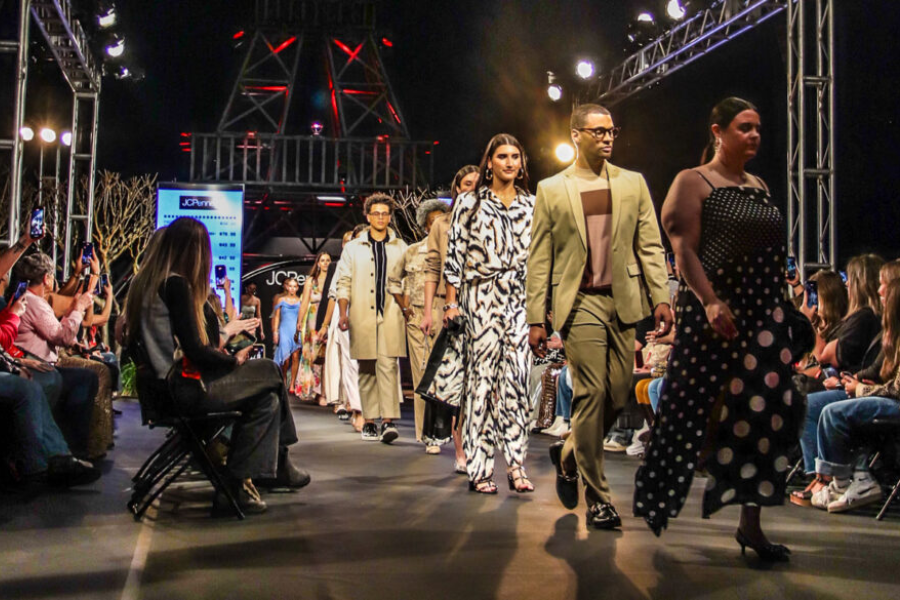
Image courtesy of BMF
Brian Feit - Founding Partner, BMF
“The most important shift in events right now is the move toward true 360° thinking. An event can no longer be treated as a single-day activation that begins when guests arrive and ends when they leave. Today, the expectation is that experiences live across multiple touchpoints before, during, and after the moment itself. That means thinking about how anticipation builds online ahead of the event, how digital content and participation extend the experience in real time, and how storytelling, content, and community keep the momentum going long after the doors close.”
“In an era where audiences move fluidly between physical and digital spaces, the most effective events are designed as integrated campaigns, where the live moment is just one part of a larger narrative that continues across social, media, and digital platforms. That shift also requires a more holistic approach to planning by working with partners who can think across strategy, storytelling, and execution so the experience feels cohesive from the first idea to the final impression.”
The Shrinking Middle
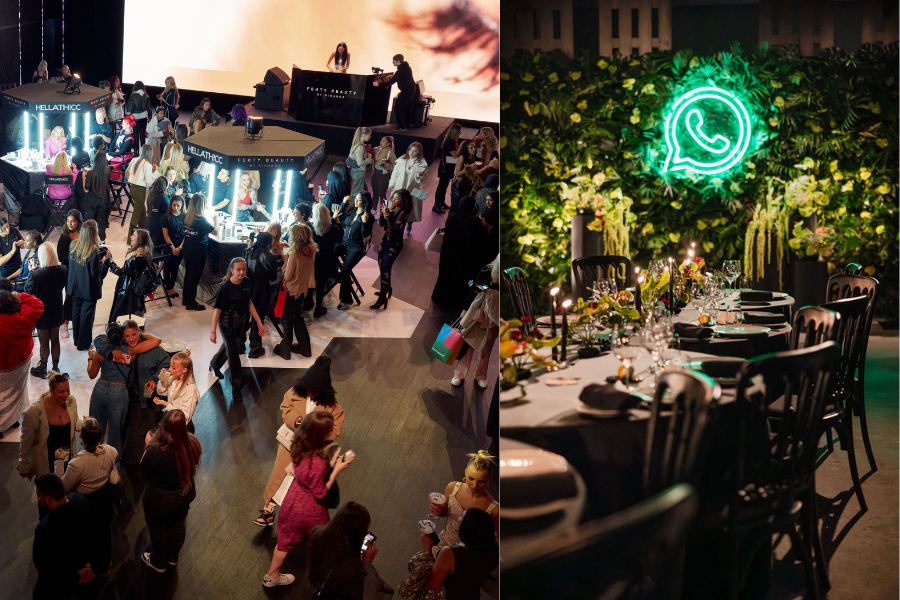
Images courtesy of Perfect Cartel
Amanda Garrett - Vice President of Growth, Perfect Cartel
“The middle is shrinking in experiential. There used to be a steady flow of mid-sized programs that sat between big, high-impact moments and smaller, more efficient executions, but that layer is becoming less common. Brands are increasingly either investing in highly elevated experiences that feel hyper relevant and worth the spend, or opting for more streamlined programs. What’s getting squeezed are the events in between without a clear point of view or strong return. Brands are no longer hosting events simply for the sake of it. There needs to be a clear purpose behind the investment, whether that’s cultural relevance, measurable return, or content that extends beyond the moment itself. There’s simply less room now for anything that doesn’t justify its place.”
Giselle Lafaurie - Founder, The Dot: Creative + Strategic Lab
“At The Dot Lab, we see brands approaching events in two very different ways right now. For larger brands with bigger budgets, the focus is on creating impact through immersive experiences, large installations, or highly visual activations designed to generate buzz and leave a strong impression. These types of events are powerful because they create scale, visibility, and moments that people want to photograph and share.”
“For smaller brands, or brands working with more limited budgets, we believe the most effective approach is consistency and intimacy. Instead of investing in one or two big experiences a year, we encourage brands to host ongoing, smaller gatherings, like masterclasses, workshops, or founder-led sessions, with carefully curated groups of potential clients. These environments allow people to truly interact with the brand, understand its story, and experience the product firsthand. That kind of authentic connection often leads to stronger word of mouth and helps build long-term brand loyalty.”
Intimate, Curated Gatherings With Intention
Tyler Hollinger - Founder, HighLife Productions
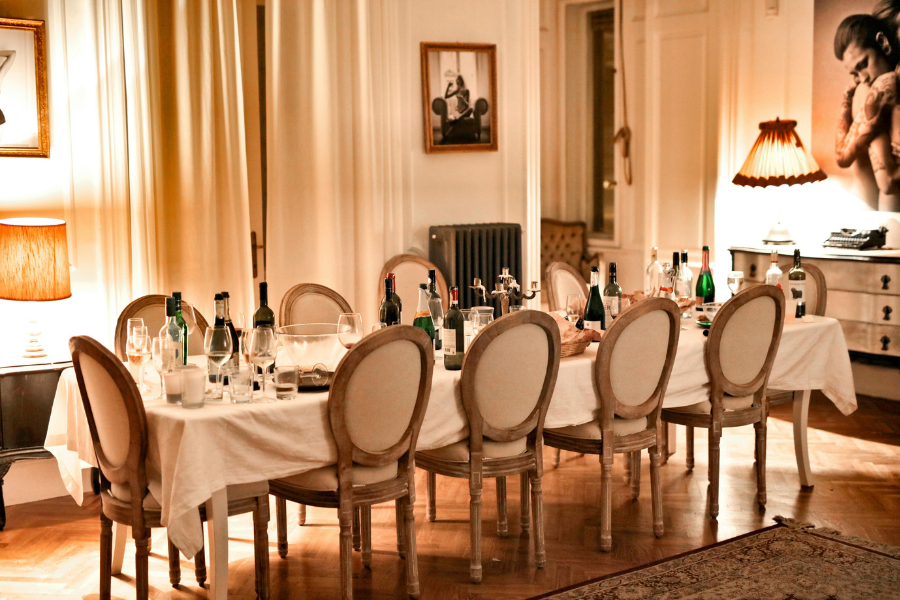
“One of the most significant trends we’re seeing right now is the shift toward highly curated, story-driven events with smaller guest lists. At The HighLife Productions we approach event design like storytelling—every element, from the lighting to the music to the menu, works together to create a narrative experience for the guest.”
“Increasingly, brands are moving away from large, anonymous activations and instead investing in more intimate gatherings where the right 50–150 people can have a deeper, more memorable connection with the brand. A huge part of that experience is exceptional food and beverage thoughtfully crafted cocktails, seasonal menus, and moments that engage all the senses. Because we also operate our own venues, FESTIVÁL Café and the Clare Rooftop in New York City, we see this trend up close: many companies now prefer smaller, beautifully designed spaces where they can host curated guest lists, meaningful conversations, and immersive brand storytelling rather than simply maximizing headcount. The result is an event that feels less like marketing and more like an unforgettable experience. Which really gets to our ethos of being hospitality first.”
Matthew Alexander - President & Founder, VISUALIZE Creative Agency
“One of the most defining event trends right now is the shift toward highly personalized, immersive, story-driven micro-experiences. At VISUALIZE, our team is seeing brand clients move away from large-scale, one-size-fits-all events and instead investing in more intimate, curated environments that feel exclusive and emotionally resonant. These experiences are designed with the individual guest in mind - whether through tailored programming, interactive storytelling, or thoughtful sensory details that create a lasting impression.”
“In an era where audiences crave authenticity and connection, these smaller-scale events allow brands to build deeper relationships and create moments that feel both shareable and meaningful. Ultimately, it’s less about grand scale and more about intentional impact. We craft experiences that people genuinely feel part of, rather than just attend.”
Natalie Denyse - Founder, In Good Company PR
“Gatherings are being reprioritized in industries that have not traditionally been known for design-forward, multifaceted celebrations. Events in media and technology are booming right now. New generation leaders and iconic leaders in business are paying closer attention than ever to how they can create premium, in-person experiences in real life that supersede anything the digital world has to offer. Think closed circle, lock-and-key experiences that aren't seen from every social angle, but rather reserved for the special few. Premiere hospitality properties and non-traditional spaces like cultural institutions and historical landmarks that have the technical advantage of buyout readiness and the agility to work with a client's vision are best positioned in this new era of event culture. For the right client or brand, these hotels are leaping to transform their space into a physical representation of their clients' style, personality, and goal of the gathering.”
Gabby Wickham - Founder, Curaconn
“The ultimate status symbol in luxury hospitality right now isn't a highly-publicised VIP table, it’s the absolute sanctuary of being unrecorded. We're officially entering the 'Analogue Era.' The smartest Tier-1 venues are enforcing strict lock-and-key phone policies, ditching public launches for whisper networks, and adding deliberate friction back into bookings (think landline-only reservations). The reality is that the global 0.1% are totally exhausted by digital noise and dining rooms that feel like content farms. By confiscating screens and rejecting mass visibility, you instantly weed out the transient, do-it-for-the-grid crowd. It protects your UHNW clients' privacy and gives them the one thing money struggles to buy right now: actual, undivided presence. Ultimately, this 'anti-launch' approach drives massive intrigue, protects the brand's long-term equity, and lets you command a much higher premium.”
The Return of Guerrilla Marketing
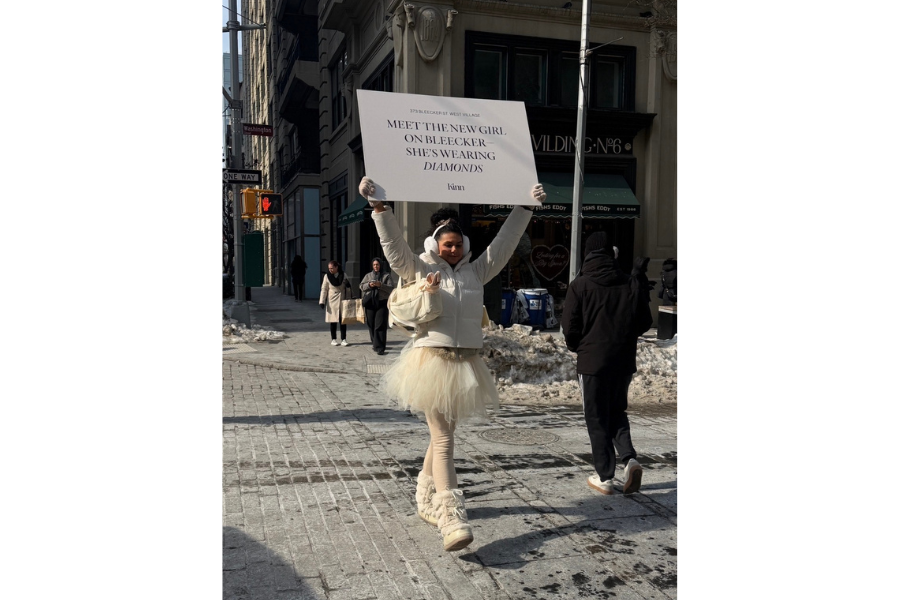
Image courtesy of Savoir Agency
Tamalin Srisook-Polo - Founder & CEO, Savoir Agency
“As the founder of Savoir Agency, one of the most defining experiential trends right now is the return of guerrilla marketing, high-visibility, disruptive, street-level activations, as a highly effective tool for brands. There’s a sharper focus on amplification and earned media, with brands using unexpected, real-world moments to spark attention and let it travel online. We’re seeing this done well by brands like Liquid Death, SKIMS, and Poppi, where physical presence is intentionally designed to drive content, conversation, and cultural relevance. What once felt scrappy is now strategic, this “phygital” approach can be layered into any event or activation to extend reach beyond its footprint. At a fraction of the cost, often as little as a third of traditional marketing, the return is outsized. The advantage right now is showing up in the real world in a way people actually notice, and giving them something worth talking about.”
Leveraging the Growing Influence of Sports Culture
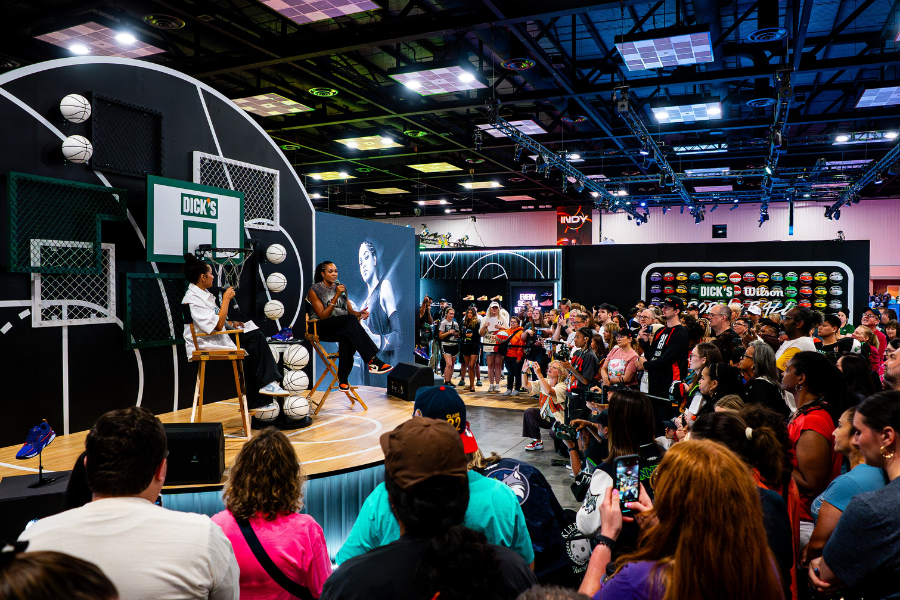
Image courtesy of Motive
Christopher Reinhard - Senior Vice President, Executive Creative Director, Motive
“It’s not new to see brands exploring the cultural influence of sports—this is, by far, the most broadly impactful era for sports in our history—but it’s becoming increasingly clear that in order to have an impact within the narrower scope of sporting events, brands absolutely must deliver back against the culture that sports are breeding. It’s one thing to be present at the Super Bowl or an All-Star Game, but it’s entirely another to show up with a purpose that feels additive to the moment. Brands that understand how to supplement role the “scene” tend to create deeper relationships with attendees, serving up experiences that elevate the atmosphere through food, fashion, gaming, interactives or access. To be a brand in sports isn’t just to show up where sports are played; it’s to be a genuine participant and creator for the game beyond the game.”
“As a trusted PepsiCo partner for nearly 20 years, Motive has employed this mentality to great effect across dozens of brands at the Super Bowl, NBA and WNBA All-Star Games, F1 races and more—always activating with purpose built to accentuate the moment and make an impression that sticks with fans long after the final whistle.”
Sensory Immersion on Every Level
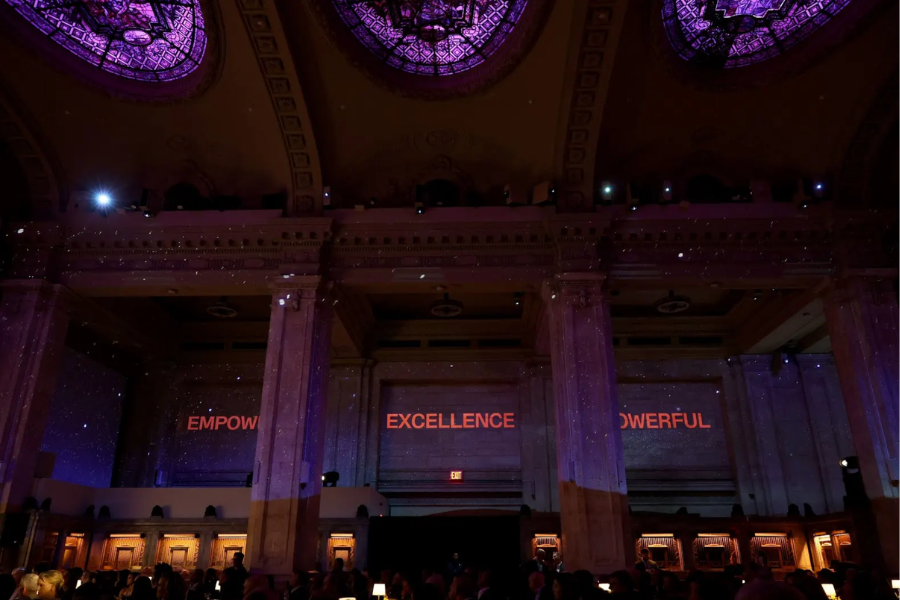
Image courtesy of Rise & Set
Team Rise & Set
“One key trend we are currently seeing is the creation of immersive sensory experiences within event venues. A primary example of this is projection mapping, which elevates decor by branding seemingly impossible surfaces such as high ceilings, walls, and floors.”
“We are currently working with our design team to transform these typically untouched spaces for an upcoming event, creating an environment that makes guests feel as though they are in another world. We believe that thinking outside the box and transforming an entire space is essential to creating a lasting first impression and a truly memorable event.”
Team Staffed Inc.
"The defining trend in events right now is the rise of fully immersive, experiential design - and it's completely redefining what it means to staff an event. For a long time, event staff were thought of as background support: someone to check you in, point you to the bar, or hand you a gift bag. That era is over. Today's most memorable events are using people as the primary vehicle for the experience itself. Staff are being cast as characters, curators, and performers, trained not just on logistics, but on the narrative of the event, the energy of the room, and how to make every single guest feel like the moment was designed just for them. At Staffed Inc., we've seen a fundamental shift in how clients brief us. The ask is no longer 'how many bodies do we need?', it's 'how do we use your people to bring this world to life?' That's a profound change, and it signals that the most forward-thinking brands understand that their staff aren't a line item. They're part of the experience."
Nadina Knight - Head of Events, ALR Music
“Speaking from a music perspective, one of the most noticeable trends in events right now is a move toward deeply curated music experiences that shape the identity of a gathering. Clients & guests alike are looking for moments that feel meaningful and intentionally designed, rather than entertainment that simply fills a programme. Music has always had the ability to guide emotion but that can now affect the flow of an evening in a very immediate way, which is why it is increasingly being used as a storytelling tool within events through bespoke performances, thoughtful artist collaborations and carefully considered sound.”
“At ALR Music, we’re seeing brands and hosts place far greater value on musical curation that genuinely reflects their identity and resonates with their audience. When music is approached with that level of care and intention, it becomes far more than a backdrop. It creates intimacy, cultural relevance and a sense of exclusivity, which is ultimately what makes an event memorable for guests.”
Nicole Guilmartin - Principal, Nicole Guilmartin Events
"At Nicole Guilmartin Events we are seeing that designing ways to surprise, delight and present the unexpected is really in demand. Think unexpected locations where a space is completely transformed, and guests have no idea what they will experience next. Even after their initial experience, they are brought into something new and markedly different and they evolve with the event. We love taking guests through a journey. I am working with a marketing client on a special project like this right now! Our objective is to blow their minds and have everyone leave talking about the experience, details and overall vibe of the night!"