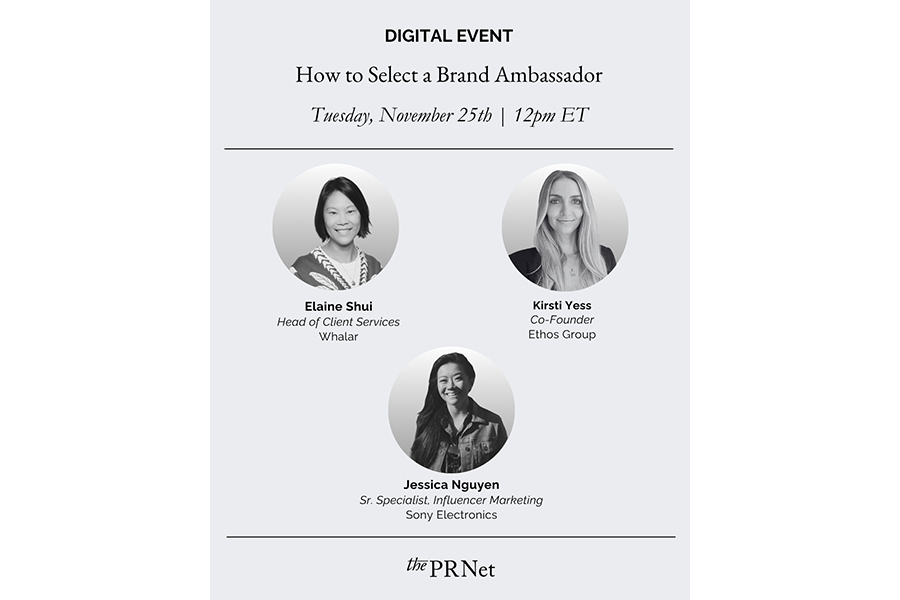
The PR Net Digital Event Recap: How to Select a Brand Ambassador
Choosing the right person to represent your brand has never been more critical. From A-list celebrities to microinfluencers, we’ve all seen how the wrong fit can quickly turn into a headline-making misstep.
In this webinar, we heard from three industry leaders who shape brand-ambassador strategy from distinct vantage points: Elaine Shui, Head of Client Services at creator and social agency Whalar; Kirsti Yess, Co-Founder of entertainment and sports communications agency Ethos Group; and Jessica Nguyen, Senior Specialist of Influencer Marketing at Sony Electronics. They broke down what truly matters when selecting a brand ambassador—from audience fit and values alignment to risk management and long-term planning.
The takeaways:
Brand ambassadorship has shifted from a visibility play to an authenticity-driven discipline.
Selecting the right ambassador hinges on values alignment, demonstrated product use, audience overlap, and community trust—not follower count.
Engagement quality, sentiment, and consistency across platforms carry increasing weight.
One-off campaigns still work when tied to a natural moment or milestone, but long-term partnerships foster deeper credibility, clearer storytelling, and better audience retention.
Many companies now build in short test phases (three or six months, for example) to validate fit before extending an ambassadorship.
Niche communities are rising in influence, with LinkedIn, Discord, and Reddit gaining traction as meaningful spaces for discovery. Brands are looking to creators who hold authority in specific cultural pockets, not just broad reach.
With constant platform shifts, creators who can maintain unified storytelling across Instagram, TikTok, YouTube Shorts, Snapchat, and emerging channels are becoming more valuable. As such, media training and cross-platform experimentation are now critical skills for ambassadors.
Looking ahead to 2026, authenticity will only grow in importance as AI-generated content increases baseline noise.
Cross-category collaborations—across sports, fashion, entertainment, and lifestyle—will continue to expand ambassador strategy long past traditional categories.
Brands are also moving toward 360 creator relationships, welcoming ambassadors into more strategic roles like product development, creative ideation, and brand advisory.
Micro-communities and niche experts will continue to gain traction, with community ownership tools (newsletters, Substack, podcasts) becoming central to sustainable, long-term ambassador success.
Relationship building still matters: ambassadors who feel connected to a brand—through communication, collaboration, and real human touchpoints—tend to deliver more authentic, higher-performing work over time.