As businesses navigate nonstop transformation, many are discovering the limits of traditional change management. The real challenge isn’t getting people to adopt new tools — it’s helping them adapt continually in an evolving environment. Rachel Zakariasen Senior Vice President, Transformational Change at Integral, shares why adaptation is redefining what effective change looks like today.
For decades, “change management” has been the default approach whenever organizations faced transformation. The playbook was predictable: stakeholder maps, communication cascades, training sessions. Success was measured by adoption, did people log into the tool, follow the process, attend the training? If the boxes were checked, leaders called it a win.
But let’s be honest: it never really worked.
Adoption was always a low bar. It told us whether people complied with change in the moment, not whether they were ready for what came next. Our world has changed. Heck, our world is change. Multiple and concurrent transformations weave through the fabric of our lives. Measuring adoption is like celebrating a patched leak while the whole roof caves in.
The truth is, traditional change management is irrelevant for the challenges organizations face today. It was built for an era when change happened occasionally, in tidy projects with clear beginnings and ends. That world doesn’t exist anymore.
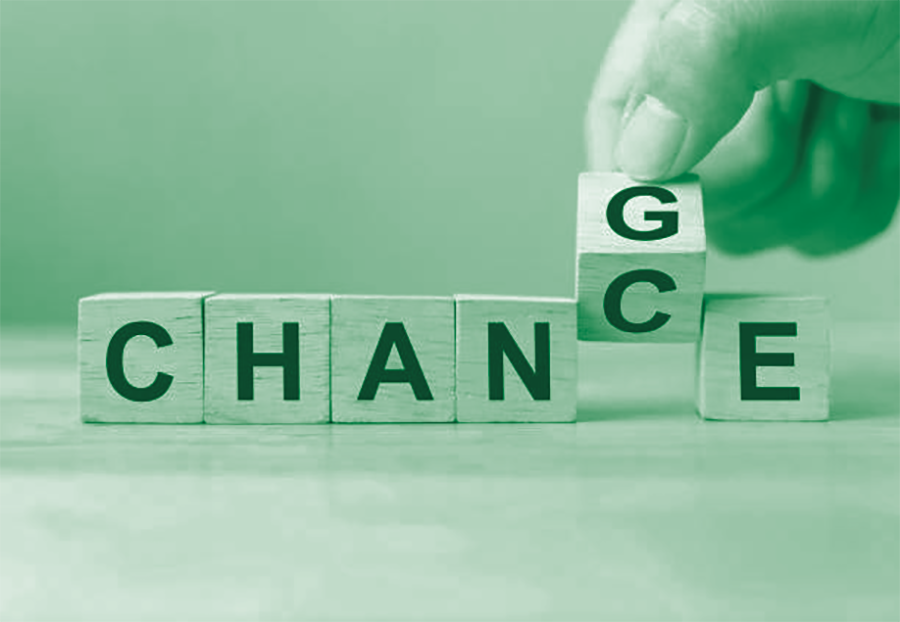
Change management died.
Thankfully, our capacity to change is alive and well.
The Shift We Haven’t Made Yet
The science of comprehending human behavior has advanced dramatically. Neuroscience, behavioral psychology and behavioral economics have given us sharper insights into how people actually operate, what drives decisions, how habits form, why resistance surfaces and what enables real, sustained change on a personal and group level.
AI now gives us the ability to act on those insights at scale. We can detect patterns faster, tailor support in real time and design adaptive systems that respond with people instead of against them.
And yet most organizations still run the same dusty playbook, managing change as if it were a one-time rollout rather than a continuous state. Assuming a mechanistic response to very human conditions like fear, hope, confusion and desire. It’s no wonder employees feel fatigued, leaders feel frustrated and transformations underdeliver.
From Adoption to Adaption
That’s why we believe it’s time for a fundamental shift: adaption is the new adoption.
Adoption is about compliance. Did people do the thing?
Adaptation is about capability. Can people keep shifting again and again as circumstances evolve?
When organizations build adaption as a core capacity, change stops being a disruption and starts becoming a source of strength. Adaption fosters resilience. It unlocks innovation. It creates cultures where people don’t just survive change, they thrive in it.
Why Integral Is Doubling Down
At Integral, we’re done pretending that outdated change management tactics are enough. We’re investing in what actually matters: equipping organizations to cultivate adaption. That means designing environments where people have the skills, mindsets and support to move with change, fast, fluidly and sustainably.
Here’s how we’re making adaption real for our clients:
The future doesn’t belong to companies that get people to adopt a tool or process. It belongs to those that make adaption their core capability.